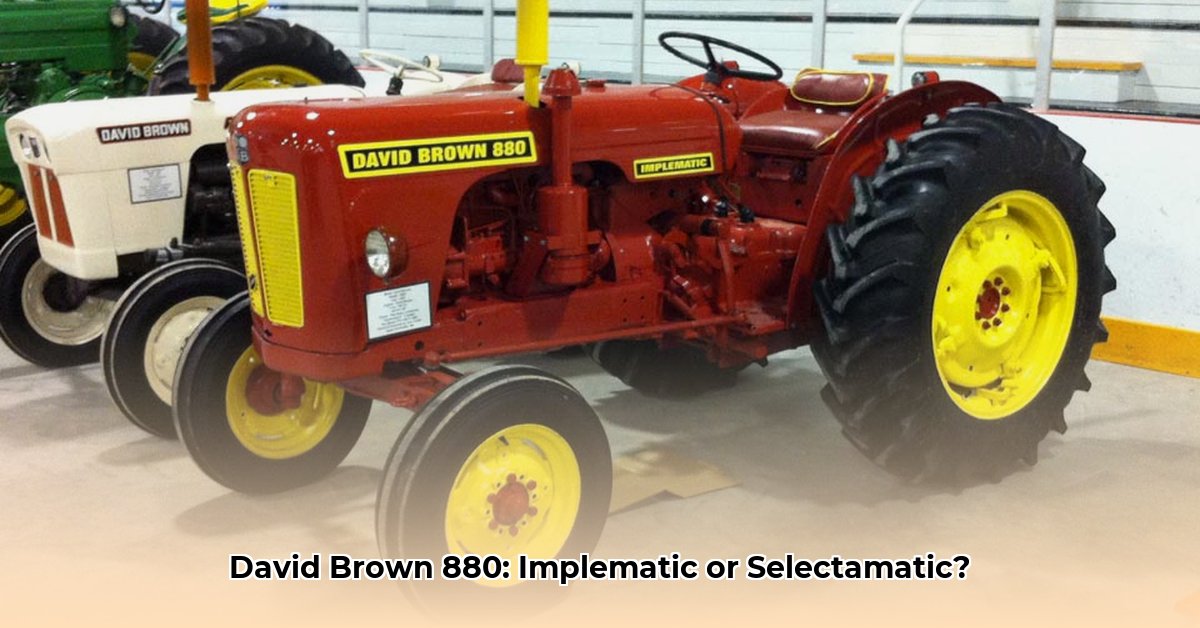
The David Brown 880, a stalwart of British agricultural history, saw significant evolution during its production run, most notably with the introduction of the Selectamatic model following the Implematic. This article provides a comparative analysis of these two variants, exploring key differences in engine design, hydraulic systems, and production history. Understanding these variations offers insight into the technological advancements of the era and the evolving needs of the farming community. For more tractor information, see this helpful resource.
Under the Hood: Engine and Power Output
The David Brown 880 Implematic originally utilized a robust four-cylinder engine, providing dependable power for a range of agricultural tasks. However, the later Selectamatic model transitioned to a three-cylinder engine. While this might seem like a downgrade, the change likely aimed to improve fuel efficiency and potentially reduce manufacturing costs.
What were the practical implications of this engine change? While both models boasted similar PTO (Power Take-Off – the shaft driving implements) horsepower (approximately 40-42 hp, though precise figures require further verification), the fuel economy differences remain largely undocumented. Did the three-cylinder Selectamatic achieve greater fuel efficiency, justifying the shift to a smaller engine? Further research into original manufacturer specifications and field testing is needed to answer this question definitively.
Hydraulic Systems: A Comparative Analysis
The hydraulic system represents a key differentiator between the Implematic and Selectamatic models. The Implematic featured a standard hydraulic lift system, adequate for many tasks. However, the Selectamatic introduced a significant upgrade – the namesake Selectamatic system. This updated system offered improved responsiveness and likely a greater lifting capacity. The smoother operation of the Selectamatic system undoubtedly enhanced productivity and ease of use for farmers. Again, precise lifting capacity figures for each system are unavailable currently, and specific documentation is necessary to quantify the improvement.
Production and Market Reception: Unveiling the Data
Precise yearly production figures for both the Implematic and Selectamatic versions remain elusive, hindering a complete quantitative analysis of their respective market success. This data gap limits the possibility of creating compelling graphs showing comparative sales figures year-on-year. Such data would be invaluable in charting the trajectory of each model's popularity and understanding potential influences like changing agricultural practices or economic conditions. The absence of these production records represents a significant area requiring further research.
Did the improved Selectamatic system result in substantially higher demand for the later model? Or did the Implematic maintain strong sales throughout its production run? Uncovering historical sales data would answer these crucial questions.
Key Specifications Comparison: Implematic vs. Selectamatic
The following table summarizes the key differences between the two models, based on the currently available information. Note that the stated horsepower and years of production are estimates requiring further verification.
| Feature | David Brown 880 Implematic | David Brown 880 Selectamatic | Notes |
|---|---|---|---|
| Engine | 4-cylinder | 3-cylinder | Likely a change driven by fuel efficiency goals. |
| Hydraulic System | Standard | Selectamatic (Upgraded) | Offered improved responsiveness and lift capacity. |
| Approximate PTO Power | ~40 hp | ~42 hp | These are estimates and require further validation. |
| Approximate Production Years | 1961-1965 | 1965-1971 | These years are estimates and need further verification |
Future Research Avenues: Filling the Gaps
To fully understand and appreciate the David Brown 880's legacy, several key areas demand further research:
Detailed Technical Specifications: Acquiring detailed technical manuals and specifications for both the Implematic and Selectamatic hydraulic systems is critical for a more precise comparison of their functionalities and performance capabilities.
Comparative Fuel Efficiency Tests: Conducting comparative fuel consumption tests using original Implematic and Selectamatic tractors under controlled conditions would provide definitive data on potential fuel savings.
Comprehensive Production Records: Locating complete production records for each model, disaggregated by year, would allow for a thorough analysis of sales trends and market reception over time.
Addressing these research gaps will provide a more comprehensive understanding of the David Brown 880 and its impact on British agriculture. This iconic tractor's story still has much to be told.